
If you spend any time reading digital marketing blogs, you’ve probably been told that SEO copywriting for small business is what your website needs to attract customers from Google. So, like many business owners, you roll up your sleeves and write a few pages. You mention your services repeatedly, write long paragraphs about your industry expertise, hit publish, and wait for the enquiries to come in.
But then… silence.
The question is: Why does this happen? To put it simply, it is because too much online advice treats search engine optimisation like a rigid formula. Many SEO copywriting tips teach you how to write for search engines, but forgets that real people are the ones reading, judging, trusting, and buying.
That is where SEO copywriting for small business makes the difference. This practical guide will show you how to write content that attracts the right audience and turns visitors into enquiries, bookings, and/or paying customers.
But to understand how this works in practice, let’s first look at what SEO copywriting actually means for a small business website.
What Is SEO Copywriting for a Small Business Website?
SEO copywriting for small business is the process of writing online content that helps your business get found on search engines and convinces the right people to take action once they land on your page.
It is not just about adding keywords to your website. It is about using those keywords in a way that feels natural, helpful, and connected to what your customers actually need.
For example, imagine two fashion houses selling ready-to-wear dresses. Both want to rank for the primary keyword “ready-to-wear dresses for women.”
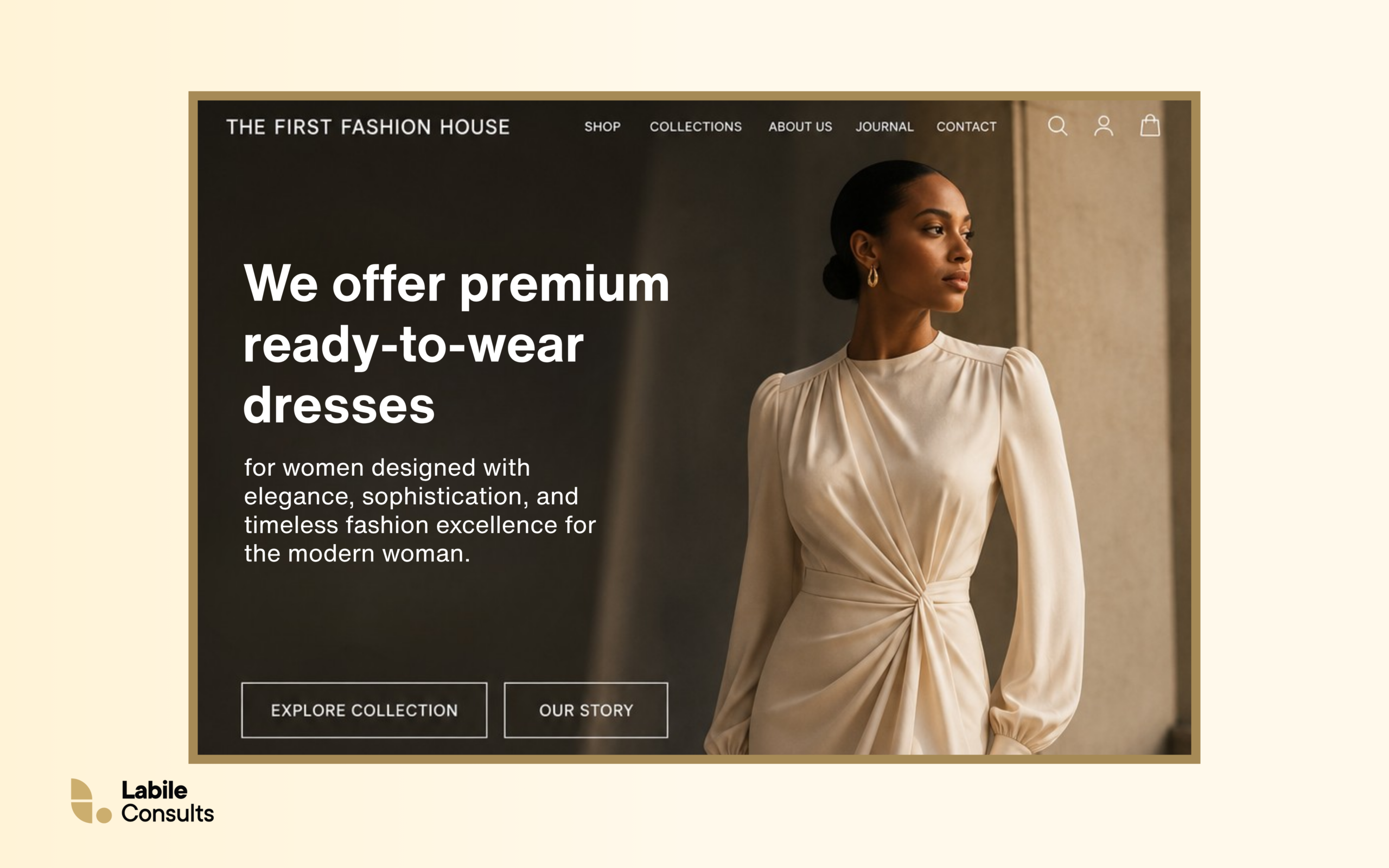
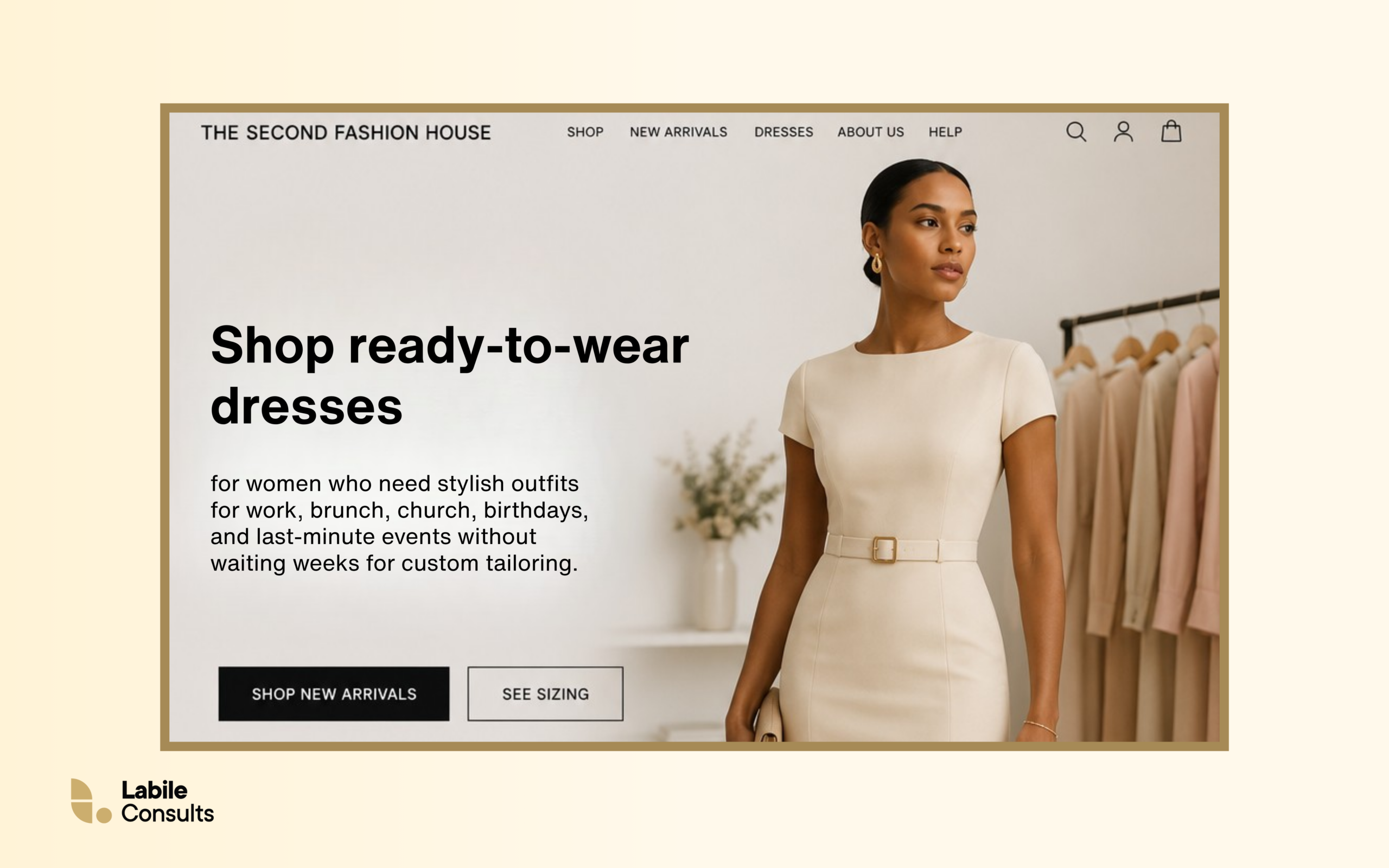
Both examples use the same keyword, but the second one is stronger SEO copywriting.
Although the first fashion house includes the keyword, it still sounds generic. It uses polished words like “elegance,” “sophistication,” and “timeless fashion,” but it does not clearly show the customer why the product matters to them.
The second fashion house copy works better because it connects the keyword to real buying situations. It speaks to women who need outfits for specific occasions, highlights convenience, and gives the reader a reason to keep browsing.
That is the difference between writing for SEO and writing with SEO copywriting in mind. SEO helps your content appear in search results, but copywriting helps the person reading it understand your value, trust your offer, and take the next step.
For small businesses, this matters because every page on your website should do two jobs: attract the right visitors and move them closer to an enquiry, booking, purchase, or conversation.
But before you can write content that does both, you need to understand what your audience actually wants when they search. The same keyword can attract people at different stages, and if your copy does not match their reason for searching, even a well-written page can fail to convert.
That is where search intent comes in. I call it the “core principle of SEO copywriting.”
The Core Principle of SEO Copywriting: Understanding Search Intent
Before you write a single line of website copy, you need to understand the psychology behind the search bar. Every time someone types a phrase into Google, they are looking for a specific outcome. In digital marketing, this is called search intent.
Yoast SEO defines search intent as the reason behind a person’s search. Are they trying to learn something? Compare their options? Find the best provider? Or buy immediately?
If your website copy does not give the searcher what they are looking for when they land on your page, they will leave. That is why SEO copywriting for small business is actually less about using the right keyword and more about matching that keyword with the right message.
When you understand search intent, you stop guessing what to write. You can look at your primary keyword, identify what the customer wants from that search, and create content that satisfies that exact need. That is how SEO copywriting moves beyond ranking to helping. It helps your content meet the customer at the right stage, with the right message, and a clear reason to take action.
An average buyer goes through different buying stages, with each stage having its own search intent. For this article, there are three primary types of search intent your buyers have that you must understand: informational intent, commercial intent, and transactional intent.
1. Informational Intent
This is the “help me understand” stage. This is when the customer is still learning. They may not be ready to buy yet, but they are trying to understand a problem, need, or option.
For example, they may search: “Are ready-to-wear dresses good for professionals?” A good SEO copywriting angle could be: “Ready-to-wear dresses for women are ideal for busy professionals who need polished, comfortable outfits they can wear to the office, client meetings, after-work events, or church without waiting weeks for custom tailoring.”
Here, the goal is not to push a sale immediately. The goal is to educate the reader, answer their question, and build trust.
2. Commercial Intent
This is the “Help me choose” stage. At this stage, the customer knows they want something, they are comparing options, but are still largely unsure which brand, product, or service is right for them.
For example, they may search: “Best ready-to-wear clothing brands for working women”. A good SEO copywriting angle could be: “Our ready-to-wear dresses for women are designed for work, church, brunch, birthdays, and everyday elegance, giving you versatile outfits you can style in different ways.” Here, the copy needs to show value, difference, lifestyle fit, and reasons to choose your brand over another.
3. Transactional Intent
This is the “Help me buy” stage. By now, the customer has done their research and is ready to take the next step. They want to make a purchase, book a service, send an enquiry, or place an order. All you have to do is make that decision as easy as possible.
For example, they may search: “Buy black ready-to-wear dress for women”. A good SEO copywriting angle could be: “Shop our black ready-to-wear dresses for women and find elegant pieces available for immediate order, fast delivery, and easy styling for your next event.” Here, the copy should be direct. It should highlight availability, delivery, price, sizing, product details, and the next step.
Once you understand search intent, the next step is learning how to turn that intent into clear, practical website copy. The good news is that you do not need to be a technical writer or an SEO expert to do this well.
With the SEO copywriting for small business tips explored in the next section, you can start writing in a way that your potential customers/clients will find easy to choose in search engine results pages, easy to understand, and easy to act on.
5 Practical SEO Copywriting Tips for Non-Technical Business Owners
1. Write the Way Your Customers Actually Talk/Type
One of the biggest mistakes small business owners make is using industry language their customers would never search for or understand. For example, a chartered financial planner might want to rank for a phrase like “optimised asset allocation frameworks.” While this may make sense to their financial counterparts, the chances of their target audience searching for this keyword on Google or Bing are close to zero. So, while you are writing industry jargon, your ideal client is more likely to search for something like “how to retire comfortably at 55” or “how to plan for retirement as a business owner.”
That difference matters, because good SEO copywriting starts with the customer’s language, not your internal terminology. Pay attention to the words people use in enquiry forms, consultation calls, reviews, DMs, emails, and comments. Those real phrases can become the foundation for stronger keywords, clearer headings, and more relatable website copy.
2. Put Your Most Important Message Above the Fold
When a user clicks on your website from a search engine result page, they need immediate visual confirmation that they are in the right place. If they have to scroll past a massive decorative image or a vague artistic quote to find what they need, they will bounce.
Your primary headline and subheadline should instantly tell the reader what you do, who it is for, and what action they need to take next.
For example, instead of writing “Luxury fashion for the modern woman,” a ready-to-wear fashion brand could write: “Shop ready-to-wear dresses for women who need stylish outfits for work, church, brunch, and special occasions.”This is clearer because it tells the reader what is being sold, who it is for, and why it is useful.
3. Structure Your Content for Scanners
People do not read websites the way they read novels; they scan the page. Nielsen Norman Group’s usability research has shown for years that web users usually scan pages instead of reading every word.
So, typically, an average visitor on your website will open a page, scroll quickly, check the headings, skim the shorter sections, look at bold phrases, and decide whether the page is worth their attention or not.
If your website copy is made up of dense paragraphs with no clear structure, visitors may leave even if the information is useful. Strong SEO copywriting for small business, especially, makes your content easy to digest.
Use short paragraphs, clear subheadings, bullet points where necessary, and simple sentence structures. Each section should help the reader find what they need without working too hard. The easier your content is to scan, the easier it is for visitors to stay, understand your offer, and take favourable business action(s).
4. Blend Keywords Into Natural Sentences
Many people assume that to optimise a page, keywords must be forced into the text exactly as they are written, even if they sound grammatically broken. When executing SEO copywriting for a small business, you never want your text to feel unnatural or forced. Otherwise, you might be committing what Google calls “Keyword Stuffing.”
Your keywords should fit naturally into the message you are already trying to communicate. Instead of repeating the same phrase in every paragraph, use it where it makes sense and support it with related terms, useful explanations, and customer-focused language.
For example, a fashion brand targeting “ready-to-wear dresses for women” can also naturally mention occasion dresses, workwear dresses, church outfits, brunch looks, size options, delivery, styling, and fabric details.
This helps search engines understand the page while keeping the content useful and readable for real people. For a deeper breakdown of where keywords should appear across a page, including your H1, subheadings, URL, and meta description, read our guide on on-page SEO strategies for small businesses.
5. Give Every Page One Clear Job
If one page is asking visitors to book a consultation, download a guide, follow you on Instagram, read five blog posts, join your newsletter, and send a WhatsApp message all at once, the page becomes overwhelming and confusing. And a confused reader rarely takes action.
Every page you write must have a singular, primary call to action (CTA). If it’s a service page, the job is to get them to fill out the booking form. Also, make your CTA prominent, clear, and repeated naturally throughout the page. The goal is not to pressure the reader, but to make the next step obvious.
Once you know the job of the page, your call to action becomes easier to write. Instead of using vague phrases like “learn more,” use direct action prompts such as “Book a consultation,” “Shop the collection,” “Request a quote,” or “Send an enquiry.”
Where to Focus Your SEO Copywriting This Week
If you have read this far and are wondering where to actually begin, start with the pages that can create the fastest business impact.
- Audit Your Homepage Message: See, SEO copywriting for small business, or even, all sizes, should begin with an audit. If you do not know what’s wrong, it’s almost impossible to find a fix. So, first, open your homepage on your phone. Without scrolling, can a visitor clearly tell what you do, who you help, and what action they should take next?
- Review Your Main Service Pages: Check whether each service page targets one clear keyword, explains the customer’s problem, and guides the reader toward one specific enquiry, booking, or purchase. If your small business sells products online, this stage is especially important; our guide to ecommerce SEO for small business explains how product pages, category pages, and buyer-focused keywords work together to turn search traffic into sales.
- Rewrite Your Headlines: Replace vague headlines like “Quality Solutions for Modern Businesses” with clear, searchable statements that explain your offer and value immediately.
- Check Your Customer Language: Look through your reviews, DMs, emails, and consultation notes. Are you using the words your customers actually use, or are you relying too much on industry jargon?
- Strengthen Your Calls to Action: Make sure every important page has one clear next step, such as “Book a consultation,” “Request a quote,” “Shop the collection,” or “Send an enquiry.”
Small changes like these can make your website copy clearer, easier to find, and more likely to turn visitors into real business opportunities.
Need Help With SEO Copywriting for Your Small Business?
Effective SEO copywriting for small business is not just about adding keywords. It is about matching search intent, speaking your customer’s language, and guiding visitors toward one clear action.
At Labile Consults, we help small businesses create SEO-friendly content that attracts the right audience and turns website visits into enquiries, bookings, and sales.
Ready to make your website content work harder for your business? Book a complimentary consultation with our copywriting team today.