
To understand what SEO marketing is, I will use an example. Two bakeries open on the same street in the same month. One spends its first year handing out flyers and hoping for foot traffic. The other spends that same year making sure that when someone nearby types “best sourdough near me” into Google, its website is the first thing they see.
Eighteen months later, one bakery is still relying on passers-by. The other has a waitlist for weekend orders, built almost entirely from people who found it through a search bar while genuinely wanting what it sold.
That second bakery didn’t get lucky. It understood SEO marketing early, and used it. So, what is SEO marketing, exactly?
What is SEO Marketing?
SEO marketing, short for search engine optimisation marketing, is the practice of shaping a website’s content, structure, and reputation so that search engines like Google show it to the people already searching for what it offers. Rather than interrupting someone’s day with an ad, it works through a process of crawling, indexing, and ranking that search engines use to discover and organise web pages, then match them to a person’s query.
How Does SEO Marketing Work?
Search engines run on three connected processes, and understanding them is the fastest way to demystify how search visibility actually works.
- Crawling: Search engines send out automated bots that move from page to page across the web, following links to discover new and updated content. If a page has no links pointing to it and isn’t listed anywhere search engines already know about, it can effectively stay invisible, no matter how good the content is.
- Indexing: Once a page is found, the search engine analyses what it’s about and stores it in a vast database alongside billions of other pages. This is where the engine decides what a page is actually for, which query it might answer, and whether it’s a duplicate of something already indexed.
- Ranking: When someone searches, the engine scans its index and orders the most relevant, trustworthy results at the top, weighing everything from keyword relevance to site speed to how many other credible pages link back to it. A page’s ranking is heavily shaped by how often other websites link to it, since that pattern signals how useful or authoritative the page is considered to be.
For a small business, this means visibility isn’t bought outright; it’s earned through relevance and consistency, which is exactly why structuring a website properly from the start makes SEO easier to get right down the line.
The Core Types of SEO
SEO isn’t a single tactic. It’s four disciplines working together, and most businesses that struggle with it invest in only one.
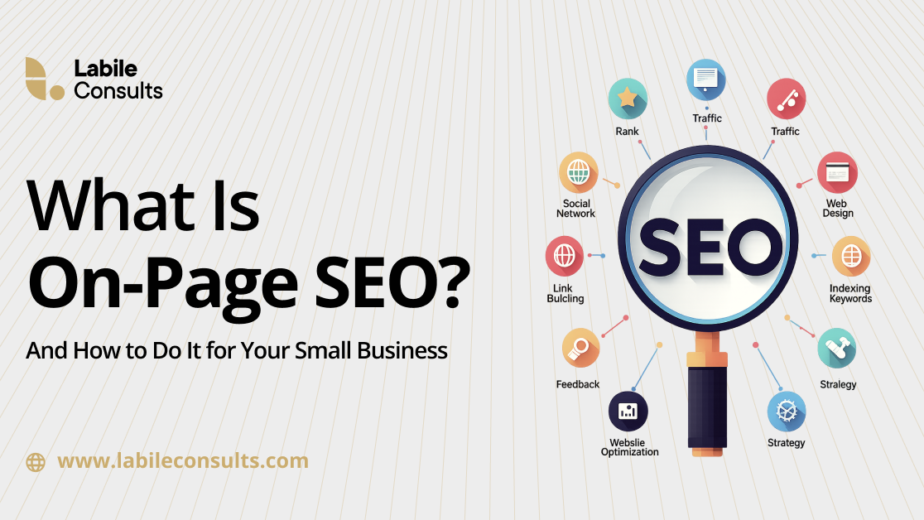
- On-Page SEO: It is basically what it sounds like; it deals with things on your page (your website). It covers everything within your control on your own website. Things like headings, keyword placement, image alt text, internal links, page titles, and content quality. It’s the layer most people think of first when they hear “SEO,” and it’s also the fastest to fix, since it doesn’t depend on anyone outside your team.
- Off-Page SEO: This is about reputation beyond your own site and can involve many factors outside your control. For example, primarily backlinks from other credible websites, which act as votes of confidence in the eyes of search engines. A mention from a respected industry publication or a link from a local business directory tells search engines your site is trusted by others, not just well-written. Off-page SEO also includes brand mentions, guest content, and PR coverage that doesn’t always come with a link but still builds the kind of reputation search engines increasingly reward.
- Technical SEO: This is the behind-the-scenes health of a website. Things like load speed, mobile responsiveness, secure connections, clean URL structure, and site architecture determine whether search engines can crawl and index your pages efficiently in the first place. A beautifully written page that takes eight seconds to load, or that isn’t readable on a phone, will struggle to rank no matter how strong the content is. This is where SEO and web design overlap most directly.
- Local SEO: For most SMEs, this is where the real revenue sits. Optimising for “near me” searches, Google Business Profiles, customer reviews, and location-specific keywords ensures a business shows up when nearby customers are actively ready to buy, not just browsing. A hair salon, a restaurant, or a clinic often gets more return from getting local SEO right than from any other single marketing activity.
Why SEO Marketing Matters for Small Businesses
Founders often treat SEO as optional, something to revisit once there’s spare budget. That thinking gets the priority backwards.
- It captures existing demand. Unlike social content, which has to interrupt someone’s scroll, SEO meets people already searching for a solution, which is why it consistently converts better than channels built on attention rather than intent.
- It compounds over time. A well-optimised page keeps generating traffic months and years after publication, unlike a paid ad that stops the moment spending does. This is arguably the single biggest advantage this channel has over every other: the return on a single piece of content can keep growing long after the invoice for writing it has been paid.
- It builds trust by proxy. Ranking on page one signals credibility to a buyer before they’ve even clicked through, something that matters even more in sectors where trust is the whole sale, like finance, healthcare, or professional services.
- It works alongside your other channels. It doesn’t replace social media or paid promotion; it supports them. A business running a social media marketing agency partnership, for instance, gets far more mileage from that content when the underlying site is already structured to rank.
SEO vs Paid Advertising
The two are often confused, but they solve different problems, and understanding the difference is central to knowing which one to lean on and when.
Paid advertising is often run through platforms like Google Ads or Meta Ads to buy placement instantly. The moment a campaign goes live, a business can appear at the top of search results or in someone’s feed, regardless of how established the website is. That immediacy matters for product launches, seasonal promotions, or testing which messaging resonates with an audience before committing long term. But the visibility is rented, not owned. The instant the budget runs out, so does the traffic, and the page itself has no residual value.
SEO works differently. It takes longer to show results, often three to six months before meaningful movement in rankings, because it depends on search engines trusting a site enough to rank it highly, and that trust is built gradually through consistent, relevant content and a healthy technical foundation. But once a page ranks well, it tends to keep generating traffic with little further spend, which makes the cost per visitor drop steadily over time in a way paid advertising simply can’t match.
| SEO | Paid Advertising | |
| Cost structure | Time and effort upfront, low ongoing cost | Continuous spend to sustain visibility |
| Timeline | Slower to build, compounds over time | Immediate, stops when budget stops |
| Trust signal | Organic results feel earned | Clearly marked as sponsored |
| Best for | Long-term visibility and authority | Short-term campaigns and launches |
Most mature businesses don’t choose one over the other; they run both, in sequence and in parallel. SEO builds the foundation that keeps working in the background, while paid campaigns fill in the gaps while that foundation matures. Businesses that rely purely on paid advertising often find that growth stalls the moment budgets tighten, which is one of the clearest arguments for investing in organic visibility early rather than treating it as a later-stage upgrade.
How to Build a Simple SEO Strategy For Your Small Business
You don’t need an enterprise budget to get this right. Three steps cover the essentials:
- Start with keyword research. Understand what your customers are actually typing into search engines, not what you assume they’re searching for. Tools aside, the fastest starting point is simply asking a handful of existing customers what they would have typed into Google before they found you.
- Fix the technical basics. A slow, poorly structured, or non-mobile-friendly site will undercut even the best content, which is why picking the right web design tools early on saves rework later. There is little point in publishing strong content onto a site that search engines struggle to crawl in the first place.
- Publish content that answers real questions. Search engines increasingly reward pages that genuinely solve a searcher’s problem over pages stuffed with keywords and little substance.
Let’s Help Make SEO Work for Your Business
To answer the question we opened with, what is SEO marketing? It’s the discipline of making sure your business is exactly where a paying customer’s search leads them, built through consistency rather than shortcuts, and tied into your broader marketing and business strategy.
If you’re ready to turn your website into a channel that brings customers to you instead of the other way around, get in touch with Labile Consults and let’s build a strategy around your business.